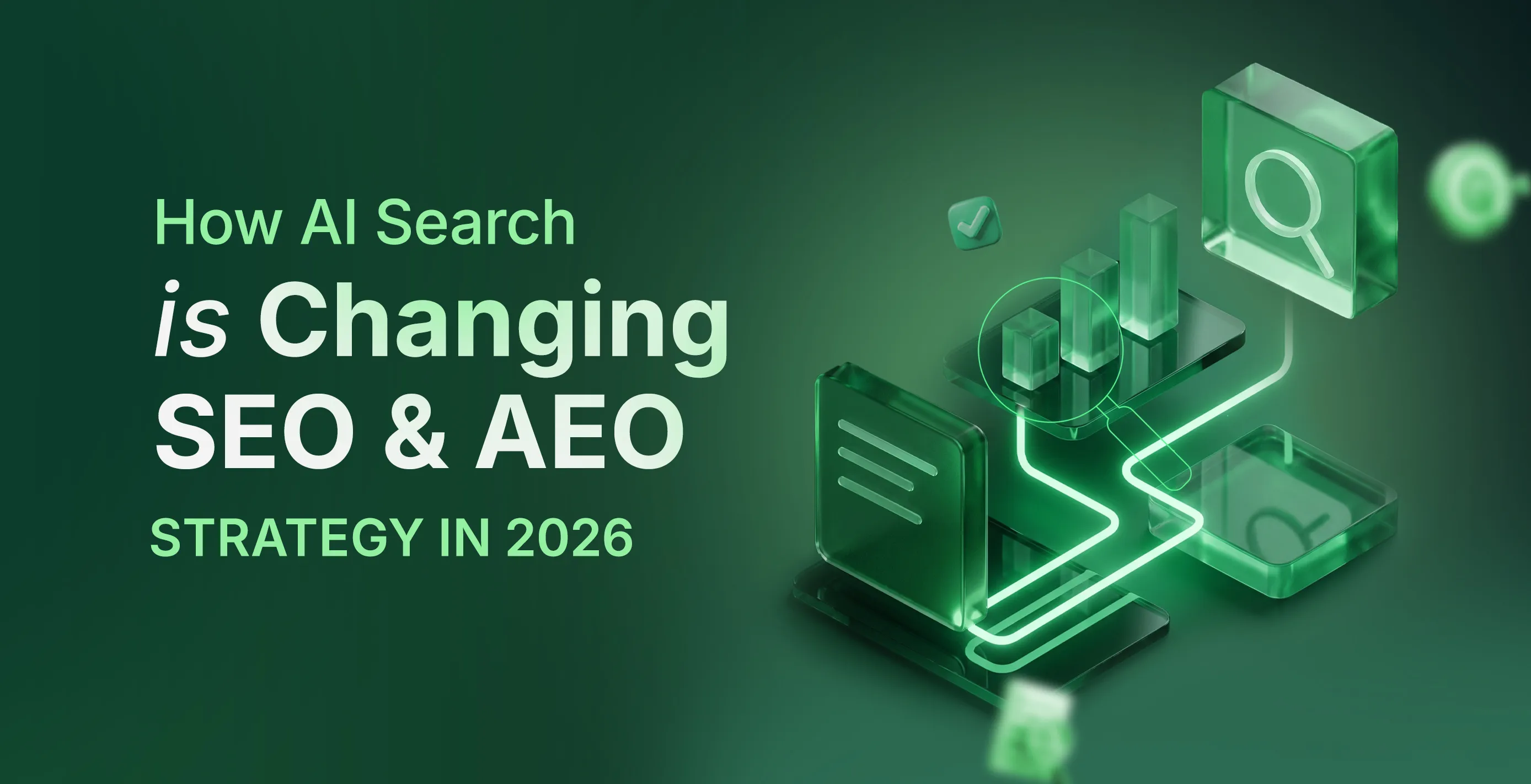
How AI Search Is Changing SEO & AEO Strategy in 2026


Summarize with Ai





Key Takeaways
- Learn how AI is changing search.
- Understand the differences between SEO, AEO, and GEO.
- Discover why AI visibility matters for brands.
- Learn how to create AI-friendly, answer-focused content.
- Explore strategies to improve brand authority and trust.
- Understand how AI search can drive better traffic and conversions.
- Prepare your business for the future of search in 2026.
Search is changing faster than ever.
A few years ago, people searched on Google, clicked on websites, and explored multiple pages to find answers. Today, users are getting direct answers from AI tools like Google, OpenAI, Perplexity AI, and Microsoft Copilot.
This shift is changing the future of SEO.
Traditional SEO is still important, but ranking on Google alone is no longer enough. Brands now need visibility inside AI-generated answers. Businesses that appear in AI responses are gaining more trust, more authority, and higher-quality traffic.
This is why AEO (Answer Engine Optimization) and GEO (Generative Engine Optimization) are becoming major parts of modern digital marketing strategies.
In 2026, search visibility is no longer only about rankings. It is about becoming part of the answer users see first.
The Rise of AI Search and AI-Generated Answers
AI-powered search tools are changing how people discover information online.
Instead of browsing many websites, users now ask questions in a natural, conversational way and receive instant answers from AI systems.
For example, users now search like this:
- “What is the best SEO strategy for AI search?”
- “How does AEO work?”
- “What is the difference between SEO and GEO?”
AI tools collect information from multiple trusted sources and generate summarized responses instantly.
This creates a completely different search experience compared to traditional search engines.
Why Traditional SEO Alone Is No Longer Enough
Traditional SEO mainly focused on:
- Keywords
- Backlinks
- Rankings
- Click-through rates
- Search engine positions
Those factors still matter, but AI search has added a new layer.
Now, content must also be:
- Easy for AI systems to understand
- Structured clearly
- Helpful and direct
- Written around search intent
- Trustworthy and authoritative
If your content is difficult to understand or poorly structured, AI systems may ignore it even if your page ranks well.
Modern SEO now includes:
- AI search optimization
- Conversational content
- Semantic search structure
- Answer-focused formatting
- Brand authority building
[[inner-cta]]
Growth of Google AI Overviews, ChatGPT, and Perplexity
AI search platforms are growing quickly across the digital world.
Google now displays AI-generated summaries directly inside search results. Users often get answers without clicking multiple websites.
OpenAI is becoming a major research tool for businesses, marketers, students, and consumers.
Perplexity AI combines AI-generated answers with source-based search experiences.
Meanwhile, Microsoft continues integrating AI deeper into search and productivity tools.
AI is changing UI/UX design in 2026. People now want:
- Faster answers
- Conversational search
- Simplified information
- Trusted recommendations
- Personalized experiences
How AI Search Is Impacting Clicks, Visibility, and Conversions
One of the biggest changes in SEO is the rise of zero-click searches.
Users often get the answer directly from AI tools without visiting websites.
At first, this sounds negative for SEO. But the reality is more complex.
While some websites may lose general traffic, businesses appearing in AI-generated answers often gain:
- Higher-quality traffic
- Stronger brand trust
- Better conversion rates
- Increased authority
- More branded searches
This means fewer random visitors and more qualified leads, which is particularly valuable for businesses that depend on local visibility strategies such as local SEO for law firms.
What Is AEO (Answer Engine Optimization)?
AEO stands for Answer Engine Optimization.
It is the process of optimizing content so AI systems can understand, trust, and use it in generated answers.
Traditional SEO focuses on rankings.
AEO focuses on becoming the answer.
This means content should:
- Directly answer user questions
- Use simple language
- Follow structured formatting
- Include semantic headings
- Match conversational search behavior
AEO helps improve visibility across:
- AI search engines
- AI assistants
- Voice search systems
- Google AI Overviews
- Chat-based search experiences
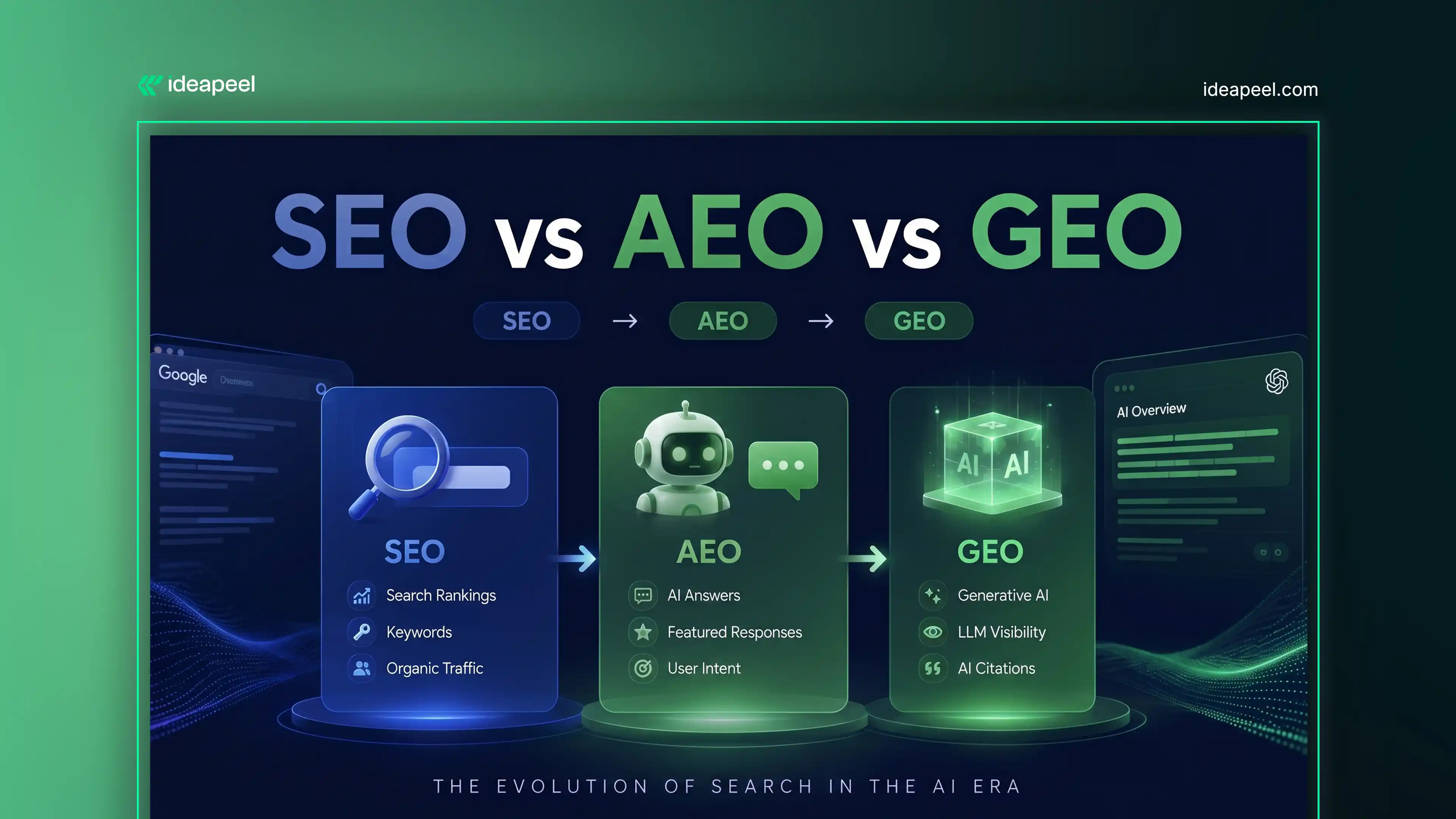
SEO vs AEO vs GEO
How AI Search Is Changing User Behavior
Search behavior is becoming more conversational.
Instead of typing short keywords like:
“best SEO agency”
Users now ask:
- “Which SEO agency is best for AI search optimization?”
- “How can SaaS companies improve AI visibility?”
- “What is the best AEO strategy in 2026?”
AI tools respond like assistants instead of search engines.
This changes how content should be written.
Modern content must sound:
- Natural
- Helpful
- Human
- Conversational
- Easy to scan
Higher-Intent AI-Driven Traffic
AI-driven traffic is becoming more valuable.
Users coming from AI systems usually:
- Already understand the topic
- Have stronger buying intent
- Trust the recommended brands more
- Spend less time researching
This often leads to:
- Better conversion rates
- More qualified leads
- Higher engagement
- Increased branded traffic
For SaaS, tech, and digital businesses, this creates huge opportunities.
Why AEO Matters for Modern Brands
AEO helps businesses stay visible in the AI era.
Without AEO strategies, brands risk losing visibility as AI-generated answers continue growing.
Strong AEO strategies improve:
- AI search visibility
- Brand recognition
- Topical authority
- Trust signals
- Search experience optimization
Brands that adapt early can gain long-term advantages over competitors.
[[question-block]]
Core AEO Strategy Framework
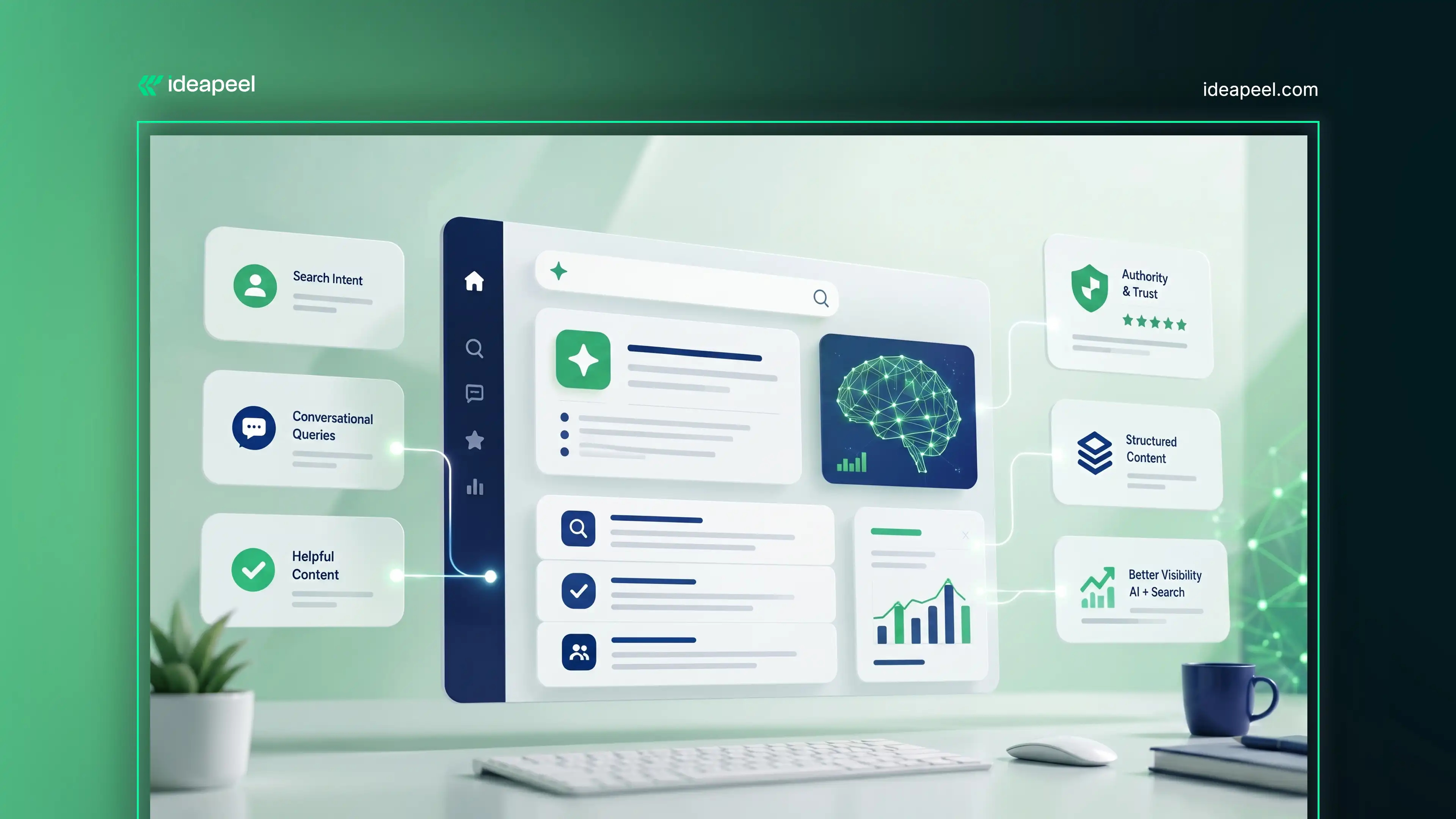
1. Increasing Brand Visibility in AI Search
AI engines collect information from many sources across the internet.
These include:
- Tech publications
- Industry blogs
- Reddit discussions
- YouTube videos
- Community forums
- News websites
- Brand mentions
The more trusted visibility your brand has online, the stronger your AI visibility becomes.
Strategies to Improve AI Visibility
Digital PR
Publish expert insights and industry-focused content on trusted platforms.
Brand Mentions
Increase mentions across blogs, communities, podcasts, and media sites.
Thought Leadership
Share expert content consistently to build authority.
Community Engagement
Participate in discussions on Reddit, LinkedIn, YouTube, and industry forums.
Content Distribution
Repurpose and distribute content across multiple channels.
2. Optimizing Owned Content for AI Search
Your website content must be easy for both humans and AI systems to understand.
Creating AI-Friendly Content
AI-friendly content should:
- Answer search intent clearly
- Use structured formatting
- Include semantic headings
- Follow conversational search patterns
- Provide original insights
Content Optimization Best Practices
Bonus: Free Webflow SEO checklist
Avoid Fluff Content
Focus on useful and practical information.
Improve Readability
Use short paragraphs and simple sentences.
Add Examples and Frameworks
Real examples help AI systems understand context better.
Use Conversational Search Language
Write naturally like people speak and search.
Optimize for Humans and AI Agents
Balance readability with search optimization.
AI Content Optimization at Scale
Managing large websites manually is becoming difficult.
Many businesses struggle with:
- Manual keyword research
- Competitor analysis
- CMS limitations
- Content refresh workflows
- Scaling large content libraries
AI tools now help automate these tasks faster.
Benefits of AI-Assisted Optimization
Businesses using AI-assisted SEO workflows often see:
- Faster content updates
- Improved scalability
- Better workflow efficiency
- Increased organic traffic
- Stronger AI visibility
- Better optimization performance
When combined with human editing, AI becomes a powerful SEO support tool.
What are the Best Practices for AEO in 2026
Focus on Search Intent
Understand what users actually want to know.
Answer questions directly and clearly.
Match Conversational Queries
Write content using natural language and real search behavior.
Prioritize Helpful Content
AI systems reward content that genuinely solves problems.
Build Brand Authority
Authority matters more than ever.
To improve authority:
- Earn trusted mentions
- Publish expert content
- Strengthen topical relevance
- Build a strong digital reputation
Structure Content for AI Parsing
AI systems prefer structured content.
Use:
- Clean heading hierarchy
- FAQ sections
- Concise paragraphs
- Bullet points
- Scannable formatting
This improves both SEO and AI readability.
Final Thoughts
AI search is reshaping digital marketing and online visibility.
The future of SEO is no longer only about ranking pages. It is about becoming a trusted source across AI systems and search platforms.
Businesses that focus on:
- Helpful content
- Clear structure
- Brand authority
- Conversational search optimization
- AI-friendly strategies
will have a major advantage in the coming years.
SEO, AEO, and GEO are no longer separate strategies.
Together, they form the future of search visibility in the AI era.
Want to make your business visible in the AI era?
Explore ideapeel's services, book a strategy call, and start building a search strategy designed for the future because the future of search isn't coming. It's already here.
[[last-cta]]
Frequently Asked Question on SEO, AEO & GEO
Enter your website URL to receive a detailed website analysis report in just 5 minutes!

What are the best AEO strategies in 2026?
The best strategies include improving content clarity, building authority, optimizing search intent, and increasing brand mentions.